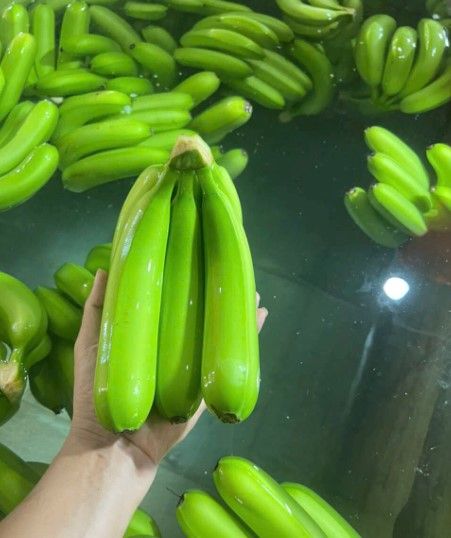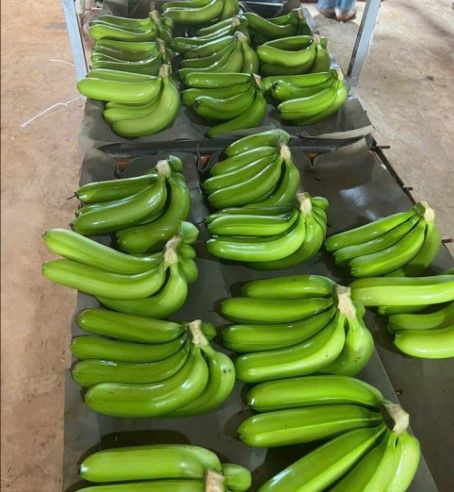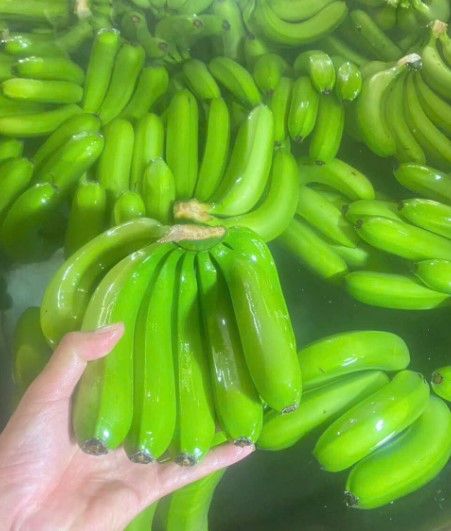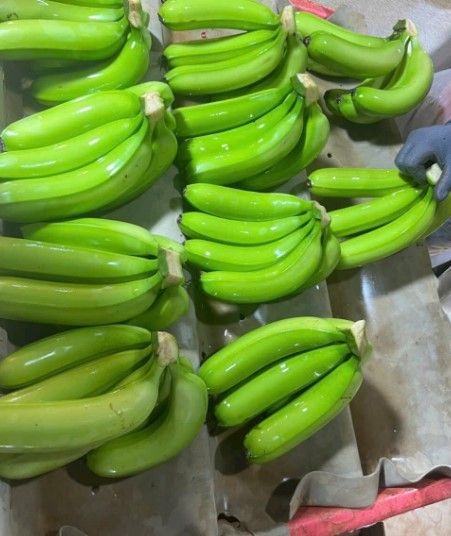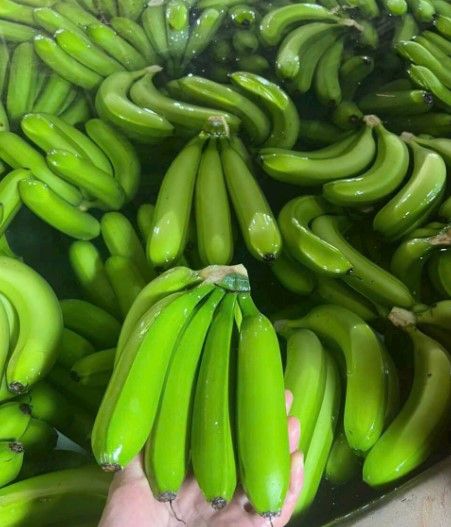

Cavendish bananas
Cavendish bananas are the most popular banana variety globally, accounting for over 90% of international commercial banana production due to their ability to withstand long-distance transport and consistent quality.
HGVINA, a leading pepper supplier from Vietnam.
The price list for black pepper is updated daily by HGVINA company.
| Product Type | Type | Length | Diameter | Price (VNĐ) |
|---|---|---|---|---|
| Banana | A | 17cm - 25cm | 34mm - 46mm | 15.000/kg |
| Banana | B | 15cm - 18cm | 13.000/kg | |
- The price list is valid for today.
- The final price will be agreed upon by both parties at the time of negotiation.
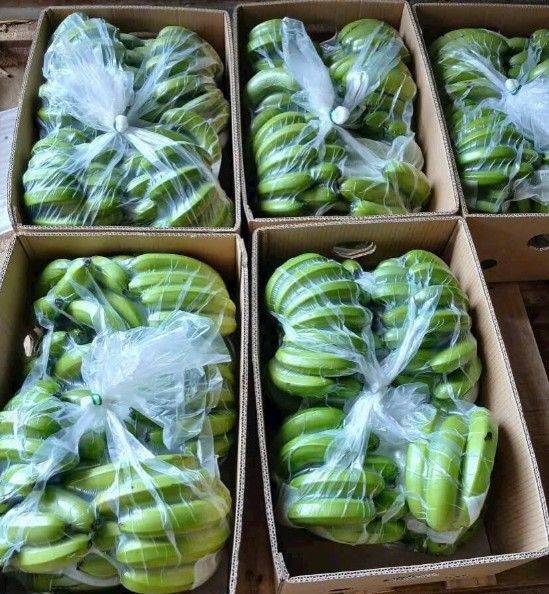
- Packaging: 13 – 14kg/carton (4-5 bunches/carton)
- Container: 40 feet
The process of producing and packaging bananas for export.
1. Harvesting and Transportation to the Factory:
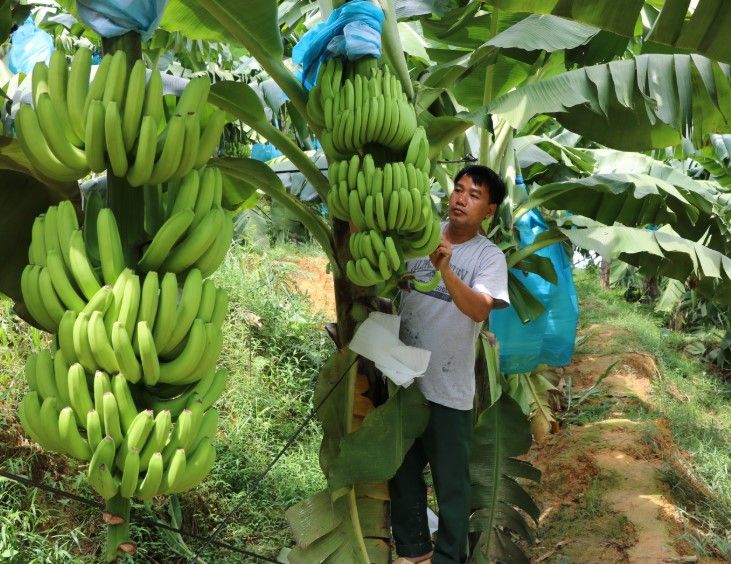
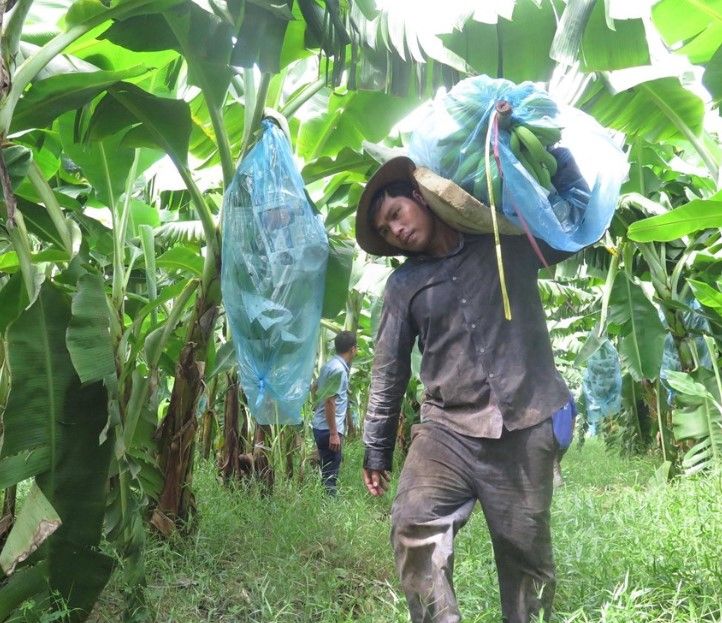
At the farm.
- Standard: Harvest when bananas reach approximately 75-85% ripeness (depending on the market and transportation time).
- Process: Cut the entire bunch of bananas, ensuring they do not touch the ground. The bunches are suspended using a pulley system (cable car) for gentle transportation to the packaging factory, avoiding impacts that could damage the peel.
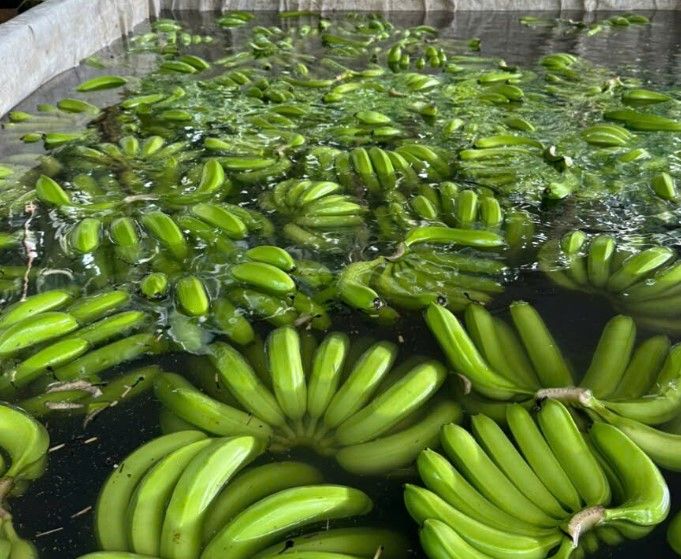
2. Separating the banana bunches and removing the sap:
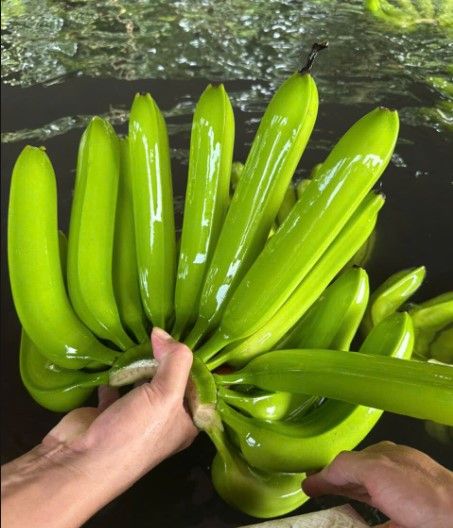
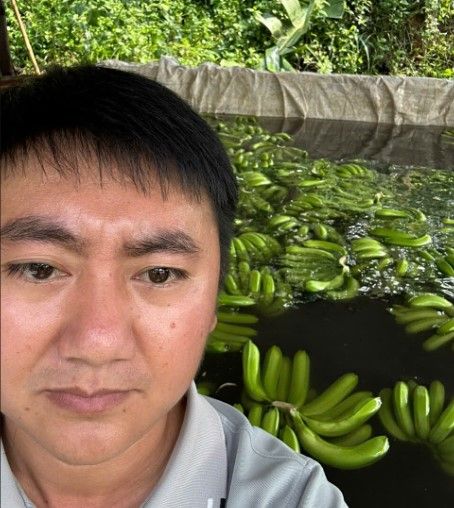
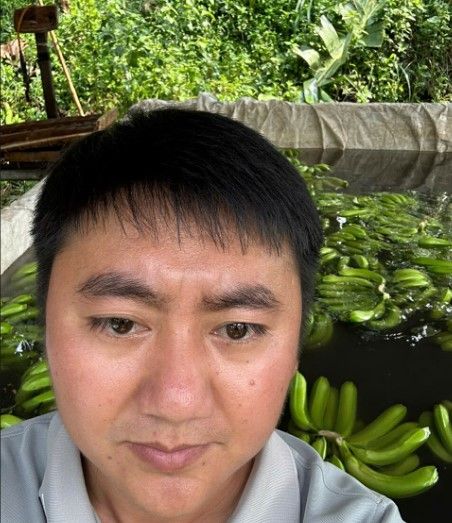
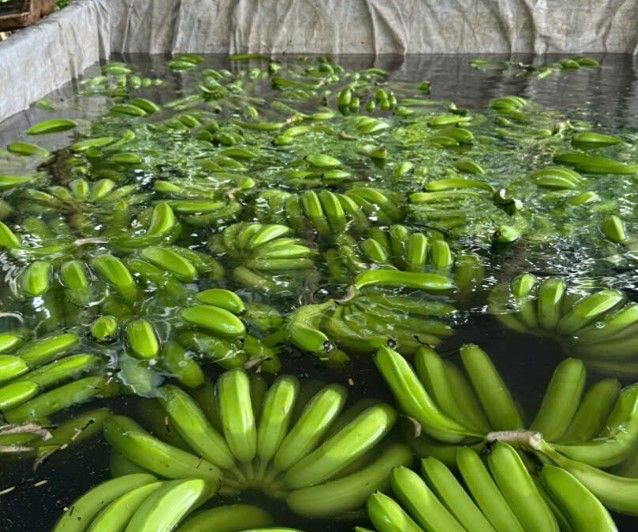
Water tank No. 1.
- Lower the banana bunches, and workers use specialized knives to separate each bunch (or cluster of bunches) from the main stem.
- Immediately immerse the bananas in clean water tank No. 1 with circulating water for about 15-20 minutes. This step helps remove sap from the cuts, preventing sap from sticking to the peel and causing discoloration.
3. Chemical Treatment and Pruning:
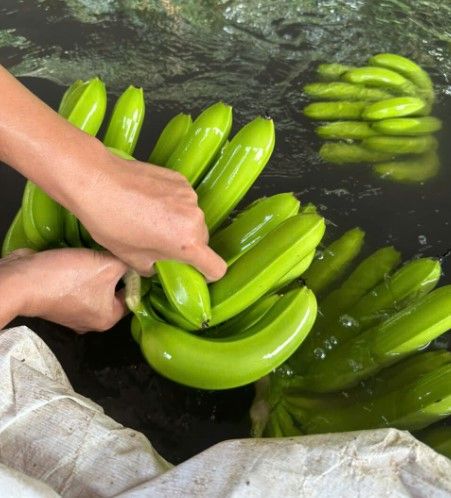
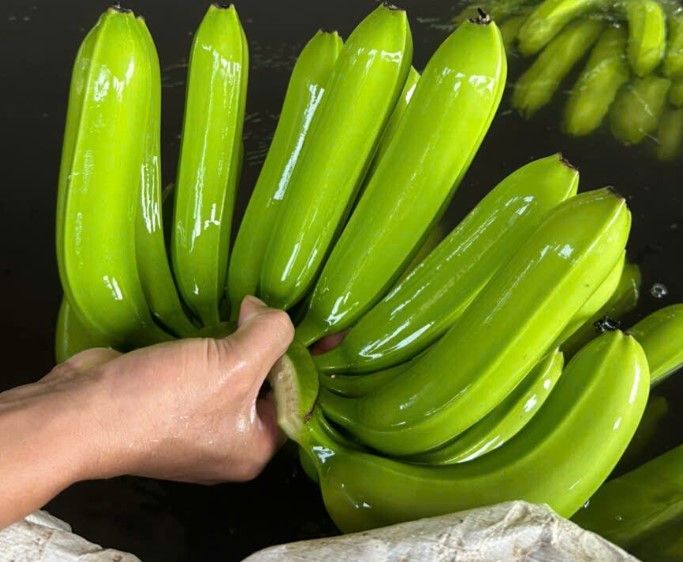
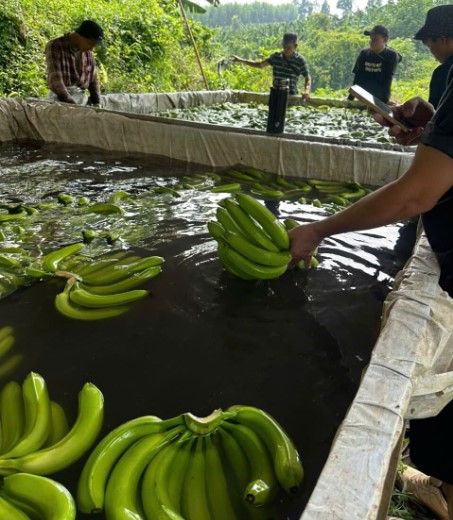
Water Tank No. 2.
- Bananas are transferred to Tank No. 2 containing a mild disinfectant solution and antifungal agents (chemicals on the list of permitted chemicals of the importing country).
- Here, workers will prune away defective, diseased, and underdeveloped bananas. Then, the banana bunches are divided into smaller clusters (individual banana hands) of 4-8 bananas depending on packaging requirements.
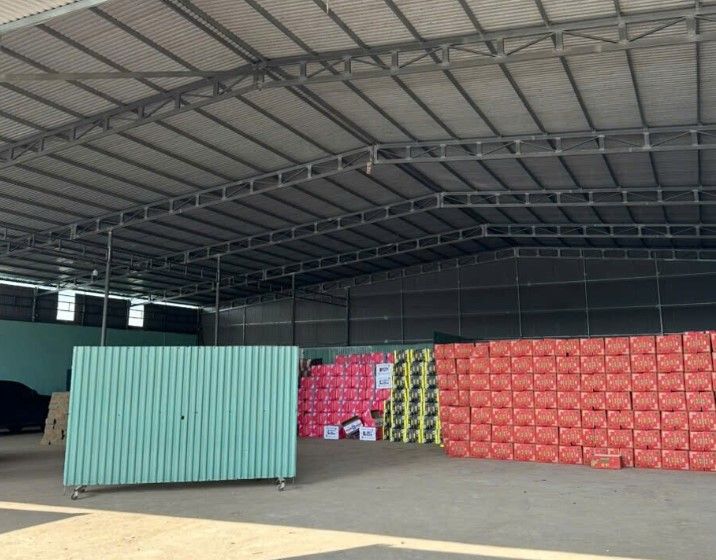
4. Packaging:
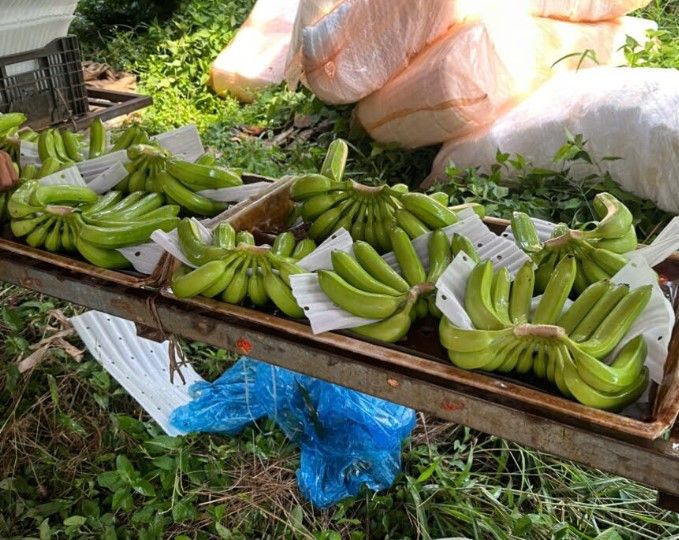
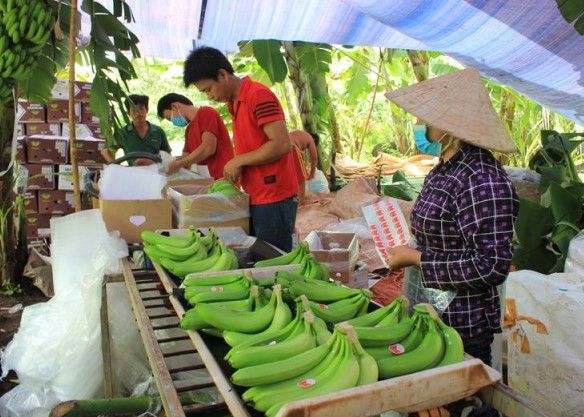
Mechanical protection.
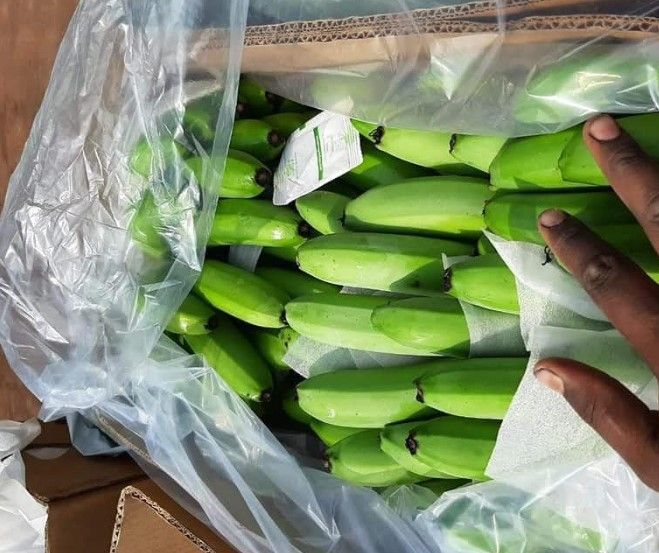
- PE bag/moisture-proof bag lining: Place a large plastic bag (usually a perforated bag or a specialized vacuum-sealed bag) inside the cardboard box.
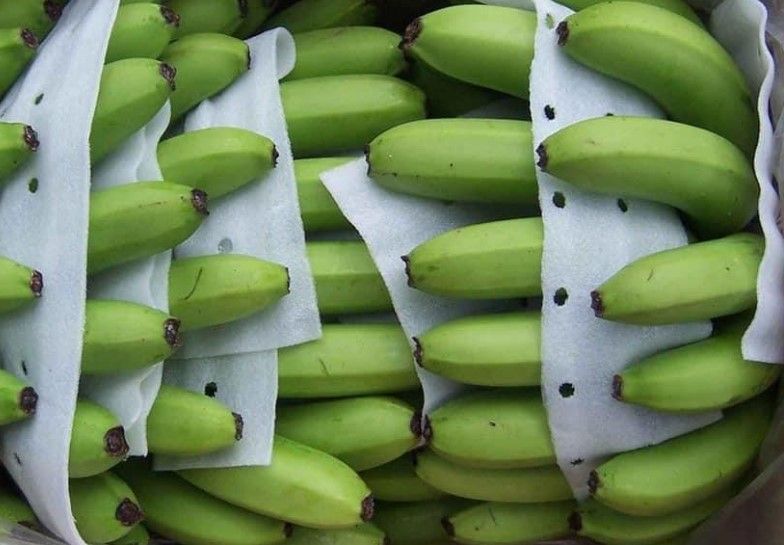
- Arranging bananas: Arrange bunches of bananas in the box in layers (usually 2-3 layers), with foam padding or wrapping paper between layers to prevent the bananas from rubbing against each other during transport.
- Vacuum seal (if shipping to a long distance) and tightly close the cardboard box. The cardboard box must have ventilation holes to ensure proper airflow.
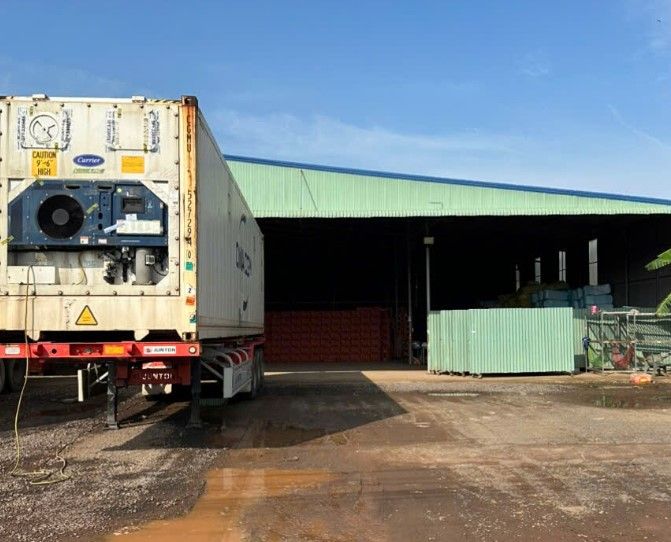
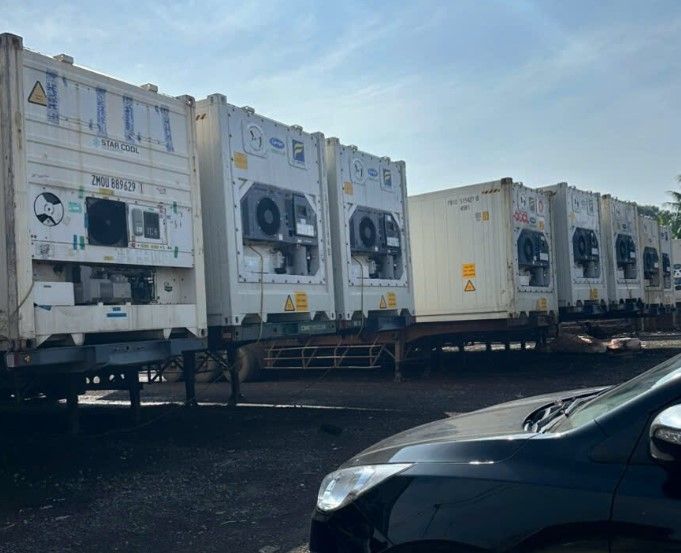
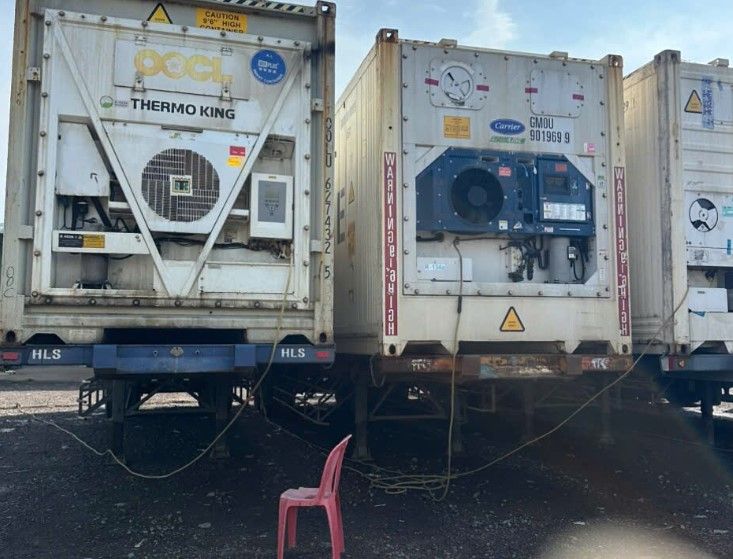
5. Cold Storage and Transportation:
Cold Supply Chain.
- Banana containers are quickly moved into cold storage to lower the temperature to 13°C – 13.5°C and the humidity to 85-90%.
- Important Note: Absolutely do not allow the temperature to drop below 11°C (the bananas will brown and stop ripening) and do not allow the temperature to rise too high (the bananas will ripen prematurely during transportation). This temperature must be continuously maintained in the cold container throughout the sea transport.